
Club Culture
The New Private Club
Membership today is less about formality and more about finding a place that earns a role in everyday life.
The idea of a private club has never been fixed. It changes with the habits of the people who use it and with the culture around it. For some generations, club life centered on formality, ritual, and a narrow definition of belonging. For others, it revolved around business relationships, convenience, and access to spaces that could not easily be found elsewhere. Today, the most interesting private clubs are being shaped by a different set of expectations.
People still value privacy. They still appreciate a setting that feels more intentional than the average public venue. But they are increasingly drawn to clubs that fit into modern life without asking them to perform an older version of status. The new private club is not built only around tradition. It is built around usefulness, atmosphere, and the quality of time spent there.
Hospitality does the work
That shift explains why hospitality now matters so much. A club is no longer defined only by what activities it offers. It is judged by how easy it is to settle in, how natural the service feels, and whether the rooms encourage people to stay longer than they planned. Members may arrive for a specific reason, but they return because the place itself becomes part of their routine.
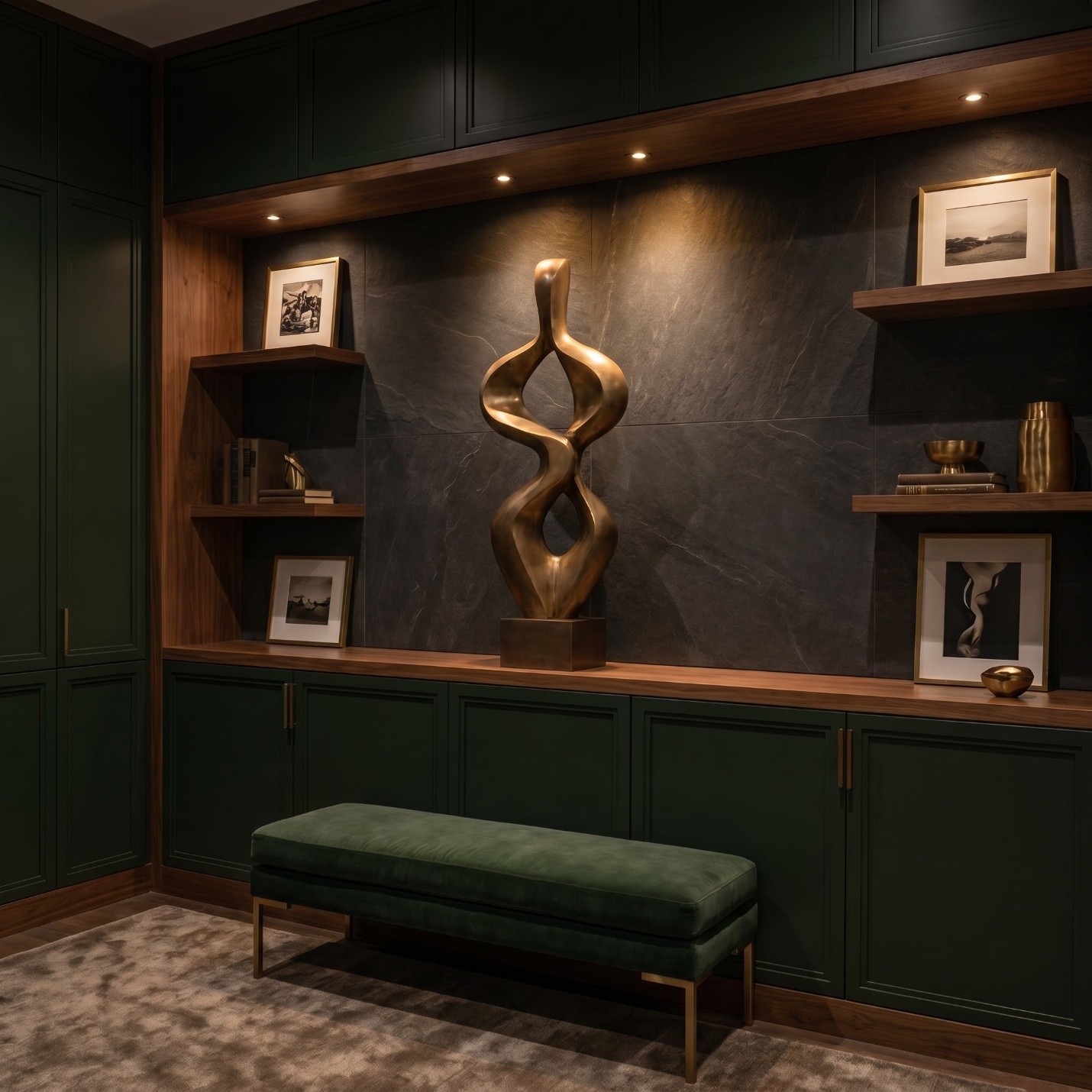
Design plays a larger role than ever in that equation. A modern club cannot rely on exclusivity alone. The space has to feel composed. The lighting has to calm rather than tire the eye. The palette has to support conversation. The acoustics have to make the room usable. The furniture has to invite people to linger. These details are not secondary. They are how a club signals what kind of life it expects to host.
Why golf suits the model
Golf is especially well suited to this newer model because it already sits at the intersection of recreation, routine, and relationships. The game offers enough structure to gather people together without making every visit feel formal or agenda-driven. A good club understands that. It treats golf as the beginning of the evening, not always the end of it.
That is one reason indoor golf has become more interesting to a broader audience. It is not only a matter of technology or weather. It is a matter of control. An indoor environment can be shaped in a way that a conventional sports setting often cannot. Light can be softer. Service can be more personal. Practice can exist alongside dining, meetings, or conversation without any sense that one part of the experience is interrupting the other.
The new private club also reflects changing schedules. Many professionals no longer want to divide their lives into rigid categories. They do not want one place only for business, another only for leisure, and another only for social time if a single, well-designed environment can support all three. The clubs that stand out now are the ones that understand overlap. They create settings where a client dinner, a practice session, and a relaxed evening with friends can all belong within the same broader identity.
Discipline, not scale
This does not mean every club should try to be everything at once. In fact, the opposite is usually true. The most compelling clubs are selective in what they are trying to be. They define a point of view and then design the experience around it. They know what kind of pace they want. They know how much energy is enough. They know what kind of member they are building for.
That sense of editorial discipline is part of what separates the new private club from both conventional recreational venues and older institutional models. It is less interested in scale for its own sake. It is more interested in consistency. Members notice when a place feels coherent. They notice when the architecture, the hospitality, and the programming all seem to belong to the same conversation.
Enclave belongs to this newer way of thinking. It is being shaped as a private indoor golf and social club, yes, but the larger ambition is to create a setting people want to return to for reasons that extend beyond golf alone. The club model here is not about noise, spectacle, or volume. It is about atmosphere, hospitality, and repeatability.
The future of private clubs will not be defined only by legacy. It will be defined by relevance. By how well a place understands the modern rhythms of work, relationships, leisure, and place. By how naturally it becomes useful. By how convincingly it makes the case for return.
Continue Reading