
Business
Why Golf Still Matters in Business
In an era of speed and screens, golf remains valuable for a quieter reason: it gives people time together that does not feel forced.
Golf has been linked to business for so long that the connection can sometimes sound like a cliché. But the reason it endures has less to do with habit than with structure. Very few environments create the same mix of time, rhythm, and conversation.
Most professional interactions are compressed. Meetings are built around objectives. Dinners are often limited by noise, pacing, and the invisible pressure to keep the evening moving. Digital communication is efficient, but it rarely reveals much beyond the immediate topic at hand. Golf, by contrast, creates space. It lets a relationship unfold over time rather than forcing it into a narrow window.
That matters because trust rarely appears on command. It forms gradually, often through small moments that have little to do with the formal subject that brought people together in the first place. Golf makes room for those moments. It allows conversation to move naturally between business and everything around it. A person's pace, temperament, humor, and attention become more visible in a setting that is not purely transactional.
It is about the quality of time
None of this means golf is useful only because deals happen on the course. That oversimplifies what actually gives the game its value. Golf matters in business because it changes the quality of time. It slows things down just enough to let people become known to one another in a different way.
That may be even more important now than it was in the past. Work has become faster, more distributed, and more digital. Relationships are often built through calls, screens, and brief in-person windows. As a result, the kinds of settings that allow for extended conversation have become more valuable, not less. People remember them. They stand out precisely because so much of professional life now happens elsewhere.
What indoor golf adds
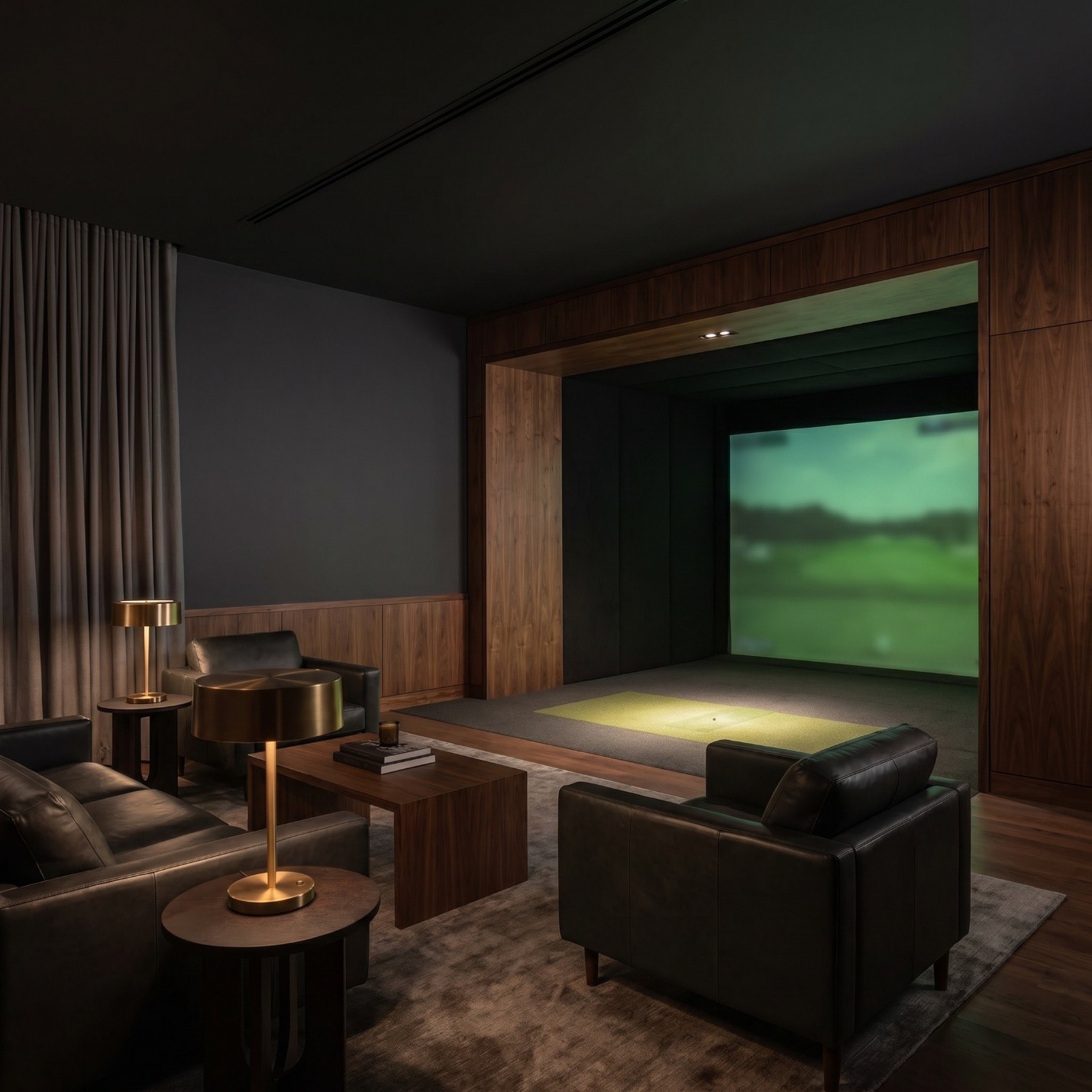
Indoor golf broadens that relevance. It makes the social and conversational strengths of the game more available in a controlled setting that can also support hospitality, dining, and privacy. Instead of requiring an entire day outdoors, a club environment can create the same general advantages in a more flexible format. A round can become part of a larger evening. Client hosting can feel polished without becoming stiff. Business can coexist with leisure in a way that feels natural rather than performative.
That is one of the most interesting things about Enclave's concept. It recognizes that golf is not only a sport or a pastime. It is also a medium for gathering. The right indoor club can support client conversations, team relationships, and informal networking without reducing everything to corporate entertainment. The atmosphere matters. The architecture matters. The hospitality matters. People are more likely to talk well when the setting itself lowers the temperature.
There is also something useful about the game's built-in humility. Golf has a way of softening pretense. It reveals patience and temperament. It creates moments of focus and moments of levity. It allows for silence without awkwardness. That combination is part of what makes it so different from a typical business meeting or even a restaurant dinner. The relationship is not being advanced through persuasion alone. It is being shaped by shared time.
Of course, golf is not the only place where that can happen, and it should not be used as a shortcut to artificial closeness. But it remains one of the most effective environments for conversations that benefit from patience. That is why it continues to matter in modern business life. Not because it is old. Because it is still useful in ways many newer formats are not.
In the right club setting, that usefulness expands. A game can lead to dinner. A practice session can become a conversation. A first introduction can turn into a habit of returning. Business often grows through continuity, and few activities support continuity quite like golf.
Private Occasions
Planning something for the period ahead? Let us know.
Continue Reading